|
|

|
|



|
|
|
|
In the spring I was asked if I ever take sequence pictures while working on a carving. I answered that I had from time to time, although not in recent years. Whenever I had, sequence photos were always well received, and I like them myself, so I think it's a good idea. It's just that stopping, dusting off, and setting up the camera adds another wrinkle to what often is a long process with lots of wrinkles to begin with. But this query got me thinking about it again until an idea for a novel approach to sequence photos came to mind and got me motivated back in that direction. |
|
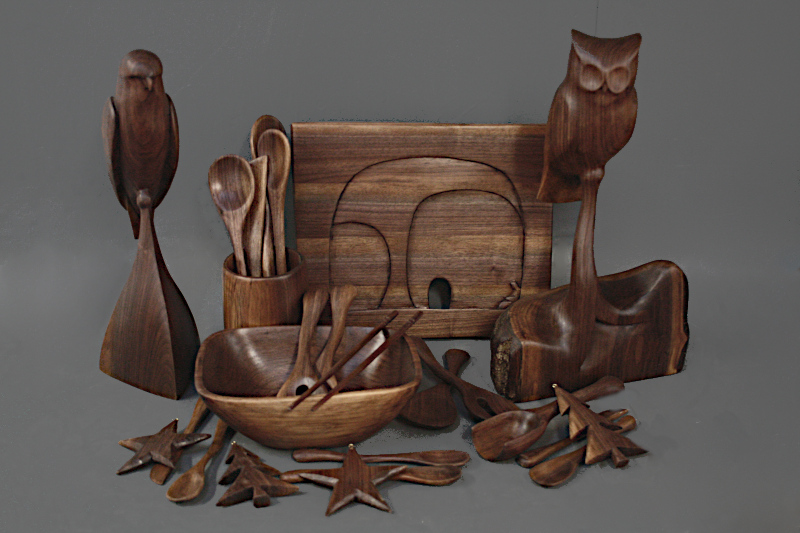
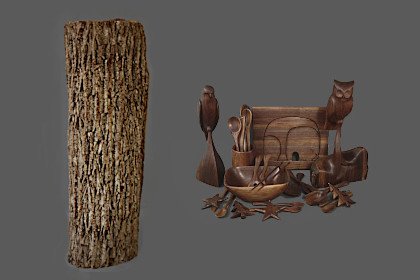
Rather than taking a photograph sequence, focusing on a particular piece, I decided to begin this time with a log and carve a variety of pieces, recording the process of everything I make. So I began with the black walnut log pictured above that measured three feet long and twelve inches in diameter. To the right of the log and at the top of the page are the twenty three items that I carved from it. My approach to this project was much the way I worked logs such as this throughout my career, especially during the years when I needed lots of items to sell. The big difference this time was that I was much more organized during the process. |
|
|
|
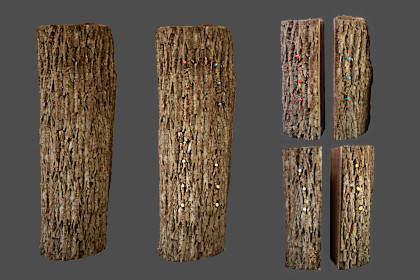
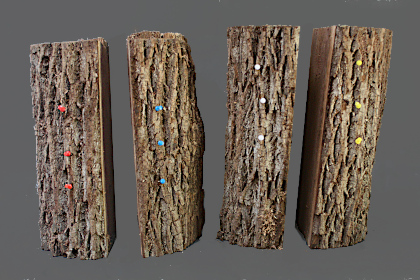
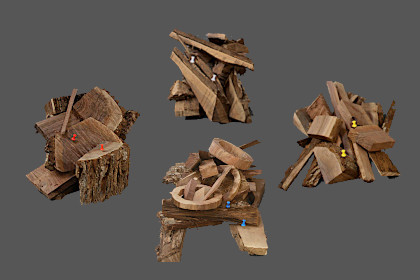
I cut the log horizontally and then vertically resulting in four smaller sections, which is often the procedure for this size of log. But first, I designated a different color to each section with red, blue, white and yellow push pins. Throughout the carving process, the colored push pins moved along with the corresponding section and then with whatever was cut from them. Below are images of the four color-coded log sections and the carvings that came from each one. Select an image to see sequence photos that were taken for each section. |
|
|
|
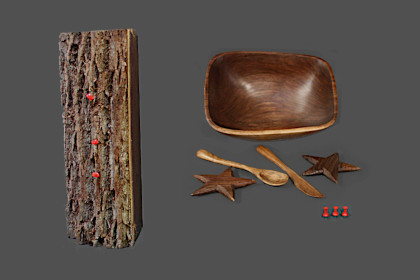
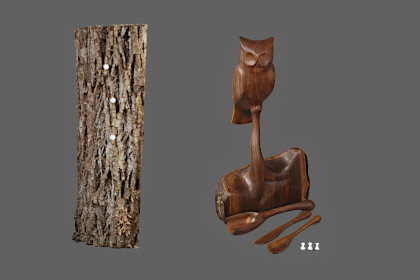
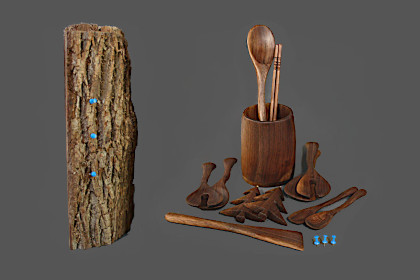
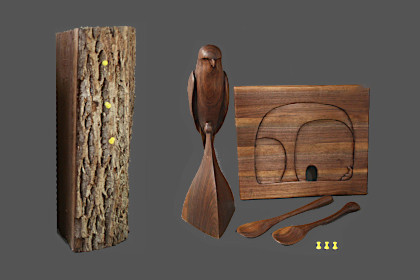
|
Select an image for sequence photographs |
|
To complete the story, at the right are pictured the cut offs that did not become carvings. I've never saved these pieces before, and was surprised to see how many there were. When considered along with all the chips and shavings that did not get saved, I would guess it represents at least half the original mass of the log. The composition of the piles is interesting to me, each characterized by what was carved from a given section. I began this project midsummer and finished it just before Christmas. The cut offs served their part in the end, fueling the first fires of the season to take the chill off the workshop as I sat by the stove with a cup of coffee, finishing up the carvings. |
|
|
|